Introduction to Sensors and Measurement Systems for CNC Lathe Machining/Processing Center Parts
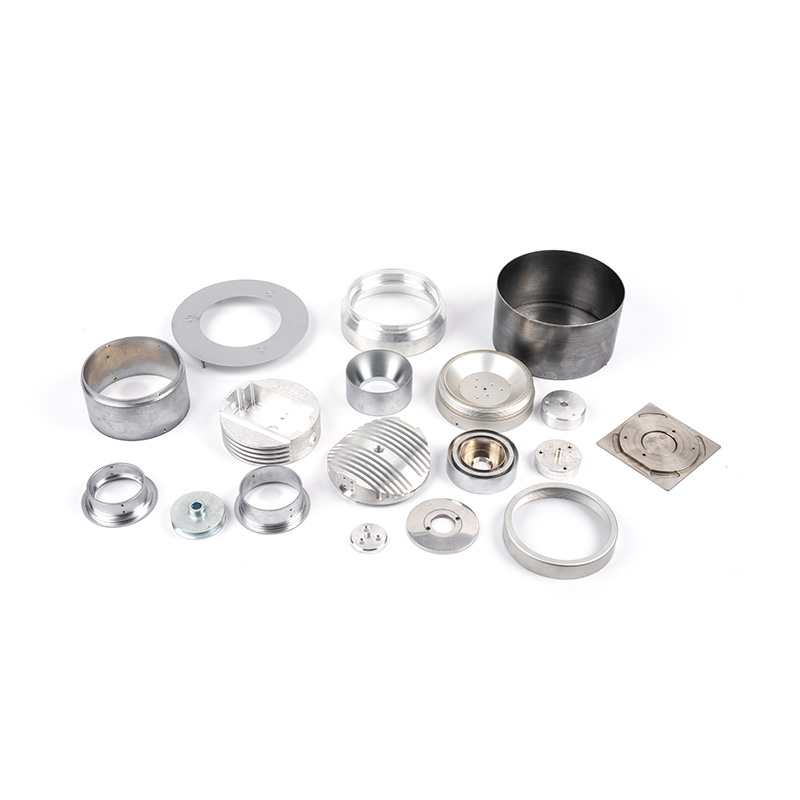
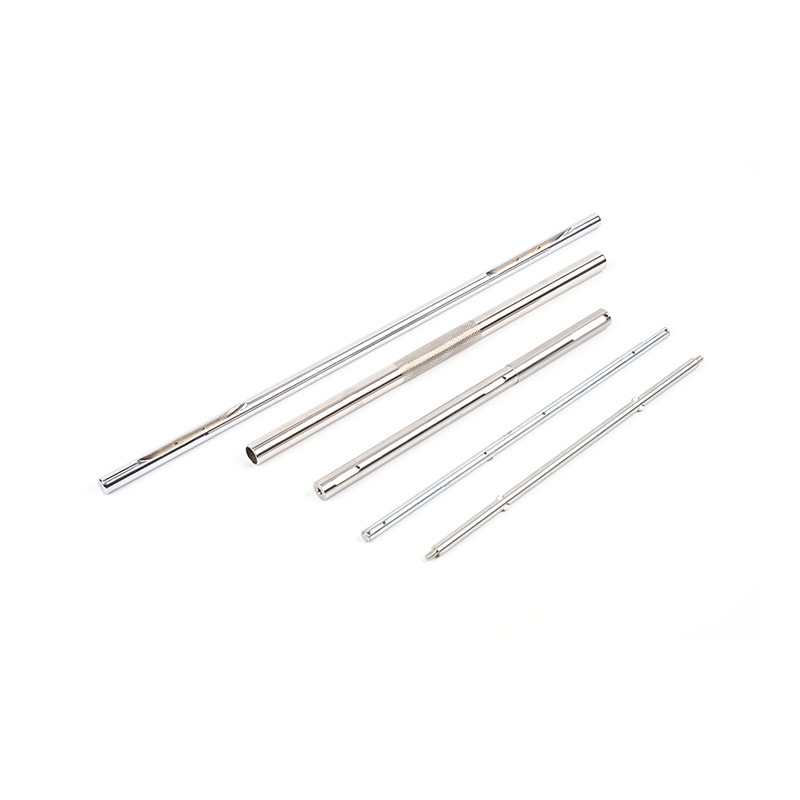
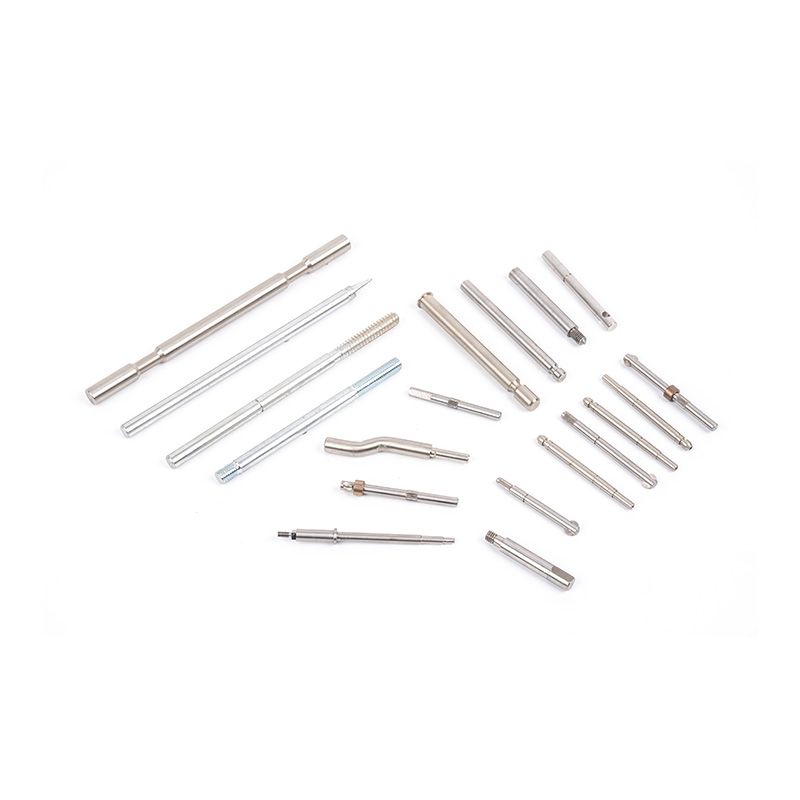
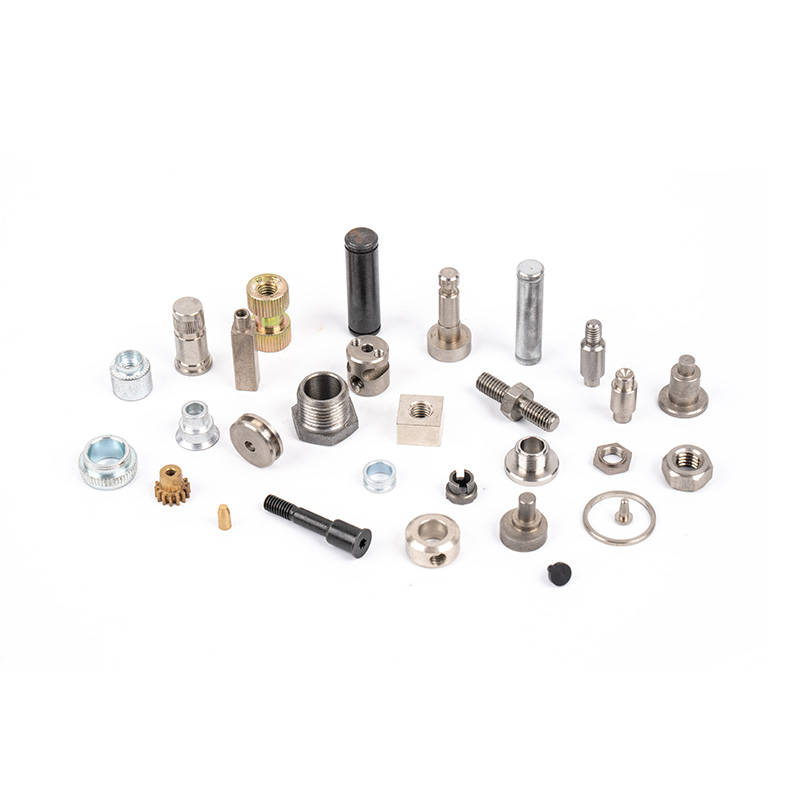
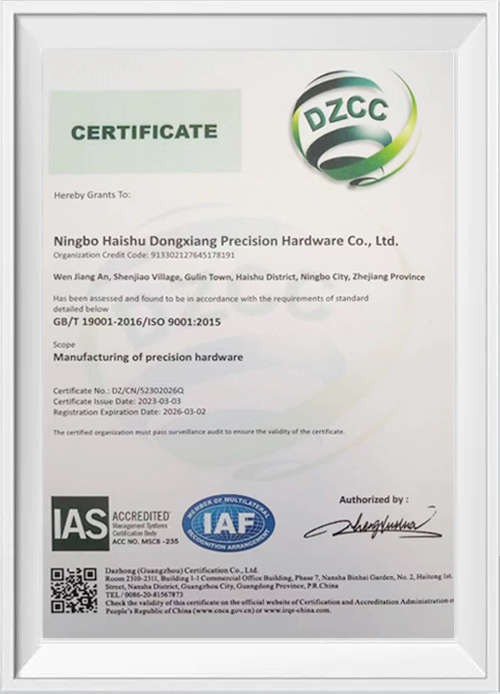
Ningbo Haishu Dongxiang Precision Hardware Co., Ltd. is a professional hardware manufacturing company located in Ningbo City. It has always adhered to the business philosophy of "innovation-driven, quality first". Our team is committed to continuously improving product quality and actively using the most cutting-edge material science and precision manufacturing technology to provide excellent hardware products to customers around the world. Over the years, our products have been widely used in home decoration, doors and windows, optical instruments and other industrial fields, and have won high trust and praise from customers. Among our many product lines, CNC Lathe Machining/Processing Center Parts occupies an important position. Parts for CNC lathes and machining centers are crucial in modern precision manufacturing, especially when achieving high-precision and high-efficiency machining tasks, sensors and measurement systems play an indispensable role. The following will introduce in detail the sensors and measurement systems used in the processing of CNC lathes and machining centers, and how they ensure the accuracy and quality of products.
1. The role of sensors in CNC lathe processing
In the process of CNC lathe processing, sensors are widely used in various links to ensure the operation stability, processing accuracy and work efficiency of the machine tool. They can monitor important parameters such as temperature, pressure, vibration, displacement, and help operators and control systems to accurately control the status of the machine tool through real-time data feedback system. The following are several common types of sensors in CNC lathe processing.
Displacement sensor: The displacement sensor is mainly used to monitor the relative displacement of the tool and the workpiece to ensure that the tool moves accurately according to the set path. High-precision displacement sensors can detect tiny deviations and make corrections in time to ensure the dimensional accuracy and surface quality of the processed parts.
Pressure sensor: The pressure sensor is mainly used to monitor the pressure changes in the hydraulic system and cooling system during CNC processing. By monitoring the pressure, the system can automatically adjust the tool feed speed or cutting force to prevent the machine tool from overloading or tool damage.
Vibration sensor: The vibration sensor is used to detect the vibration of the machine tool during operation. Excessive vibration will affect the processing accuracy and even damage the machine tool and tool. By monitoring the vibration data in real time, the control system can adjust the processing parameters to reduce vibration and ensure the stability and quality of processing.
Temperature sensor: Temperature sensor is mainly used to monitor the temperature of spindle, tool and workpiece in CNC machining. Excessive temperature will accelerate tool wear and affect machining accuracy. Through temperature sensor, the control system can automatically adjust the flow of coolant to maintain the stability of machining environment.
Force sensor: Force sensor is used to monitor the force of tool during cutting process, especially in high-precision machining, small changes in cutting force may affect the final size of workpiece. Through force sensor, the system can dynamically adjust machining parameters to achieve the best cutting effect.
2. Measurement system in CNC machining
In addition to the real-time monitoring function of sensor, CNC lathe and machining center are also equipped with various measurement systems to ensure the dimensional accuracy and shape accuracy of workpiece. These measurement systems can detect workpiece before, during and after machining, so as to minimize errors and improve production efficiency and product quality.
Online measurement system: Online measurement system can detect the key dimensions of workpiece in real time during machining. Through the automated measurement process, the system can immediately adjust the processing parameters when dimensional deviation is found to avoid defective products. This system usually works in conjunction with displacement sensors and force sensors to ensure the accuracy of each processing step.
Trigger probe: The trigger probe is one of the commonly used measurement tools in CNC machining centers. It can perform high-precision dimensional detection of workpieces before and after processing. The probe detects the shape, size and position deviation of the workpiece by contacting the surface of the workpiece, and feeds the data back to the control system for further correction of the tool path or processing parameters. This system is usually used for high-precision processing of complex parts, such as aerospace and medical equipment.
Laser measurement system: The laser measurement system uses a non-contact measurement method to scan the surface of the workpiece with a laser beam to obtain accurate three-dimensional data. Compared with traditional contact measurement, laser measurement is faster and more accurate, and is particularly suitable for measuring complex surfaces or subtle features. It is widely used in precision machining and large-scale production to ensure the geometric accuracy of the workpiece.
Optical measurement system: The optical measurement system uses cameras and image processing technology to detect the workpiece and can identify the shape, contour and surface defects of the workpiece. The optical system can quickly capture the full picture of the workpiece and generate accurate dimensional data to detect whether the workpiece meets the design requirements. Similar to the laser measurement system, the optical measurement system is also a non-contact measurement method, which is suitable for detecting workpieces with high precision requirements.
3. The synergy between sensors and measurement systems in processing
In the CNC processing process, sensors and measurement systems are the core links to ensure processing accuracy and efficiency. The two form a closed-loop control system through data communication and feedback. The following is their synergy in practical applications:
Real-time monitoring and adjustment: The sensor monitors various parameters in the processing process, such as temperature, vibration, displacement, etc. in real time, and transmits the data to the control system. The control system analyzes these data, automatically adjusts the processing parameters or issues an alarm to ensure that the processing process is carried out in the optimal state.
Precise measurement and feedback correction: The measurement system is responsible for detecting whether the size and shape of the workpiece meet the requirements, and feeds back the measurement data to the control system. When the system detects a deviation in the size of the workpiece, the control system can dynamically adjust the tool path and feed speed according to the real-time data provided by the sensor, make immediate corrections, and avoid waste.
Predictive maintenance: Sensors and measurement systems are not only used to monitor and detect workpieces, but also to help with predictive maintenance of machine tools. By monitoring the working conditions of various machine tool components, such as vibration, temperature and pressure, the system can predict possible machine failures and perform maintenance in advance, thereby reducing downtime and repair costs.
In the CNC lathe processing process, sensors and measurement systems are the key to ensuring processing accuracy, improving production efficiency and ensuring product quality. Ningbo Haishu Dongxiang Precision Hardware Co., Ltd. has introduced advanced sensors and measurement technologies in every link of production to ensure that our CNC machined parts can meet the highest requirements of customers. Through these high-tech means, our products are not only guaranteed in accuracy, but also significantly improved in production efficiency and cost control. We look forward to working with more customers to jointly promote the development of manufacturing technology and achieve a win-win future.

 English
 中文简体
中文简体